Newsletter September 2026 - Contrarian
Hoo boy, some of those notes are pretty high. I can only hit them after a lot of warming up.


Hey everyone,
Ahh, September. Do you remember? The glorious time when kids go back to school and schedules go back to their regular, more predictable pattern. It's also the time that my choir starts up again for the fall season. This season I'm again singing in the chamber choir, which is a smaller group. Unlike the international trend of not enough tenors, we have too many of us (tenors), and not enough basses or altos. Being the kind of guy I am (the kind who likes a challenge), I volunteered to sing up as a contratenor, which means I'm singing mostly in head voice as an alto 1. Hoo boy, some of those notes are pretty high. I can only hit them after a lot of warming up. If you want to see some contratenors in action, here's the all men's choir, Chanticleer, singing a Queen song.
This season, we're singing early opera pieces in Italian, English, French, and German. Needless to say, I have my work cut out for me. Here's our playlist for the season.
Speaking of having my work cut out for me, I managed to make progress on my animation journey. This month, I focused on practicing figure drawing, testing different animation techniques, and finding the art style I want for the video.
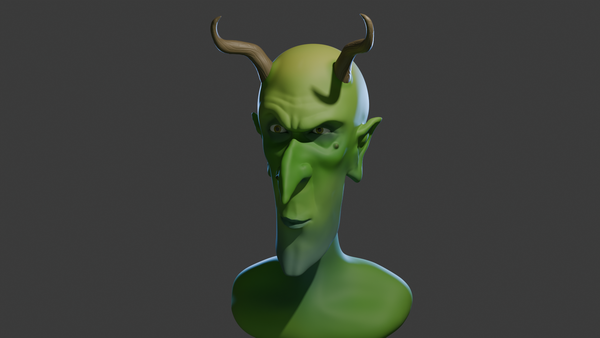
I haven't found my style just yet, but here's a pinterest board with a bunch of inspiration. Here's a stab at Tor, the main character. I'm inspired a lot by Edward Gorey, and clearly have a long way to go.
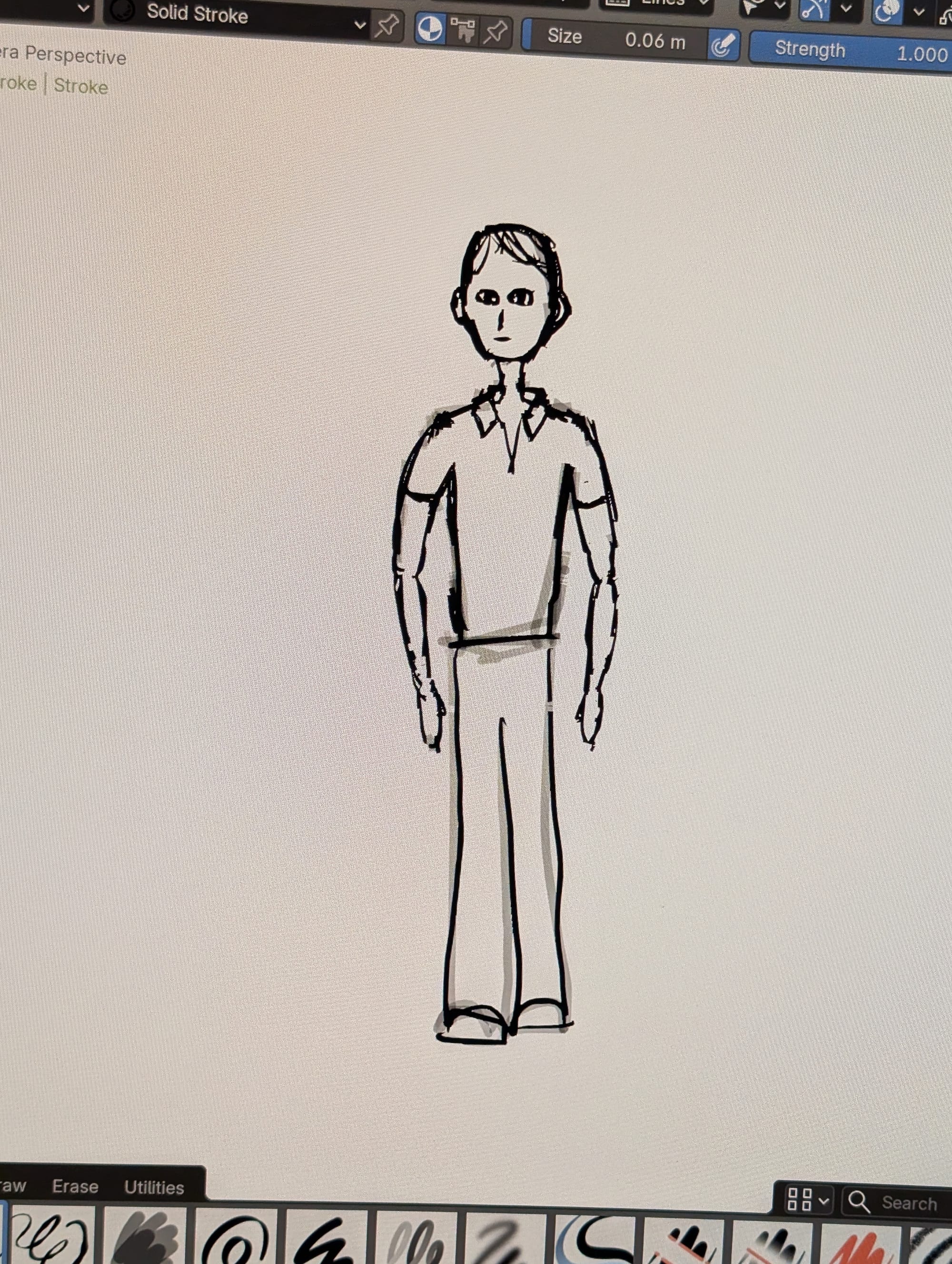
Animation wise, I'm trying two different methods. The first is more traditional, where you draw all the key frames and then create in between frames as needed to make it flow. That's a lot of drawing and editing. But here's a test animation I made of a stick figure swinging a sword.
Next, I tried a method that uses a "skeleton", and the parts of the character are attached to the various bones. Then, for each keyframe, you pose the bones how you want, and the body parts follow. You can change position quicker that way, and the animation program, Blender, can automatically move the bones from one pose to the next, creating more fluid motion (if that's what you want). I built my skeleton, also known as a "rig", and shapes for the body parts over the stick figure and had it follow the same key frames.
That's the progress. Not much to show, but learning all the methods and trying them out took a while. I think the rig method will be faster to produce an animation that looks decent, but I'll still need to do the hand-drawn keyframes as I storyboard the whole video, so I can't get away with not improving my figure drawing skills. I've always wanted to be able to draw well, so I'm glad to have a project that's forcing me to practice.
Until next time,
Todd